


 Thai
Thai
 English
 Vietnam
StackStep
Team : StackStep
Member
Ms Methaporn Somnuek
Ms Ananya Naulngam
Ms Darunrat Saenkam
Business Environment Analysis
The footwear industry is a multi-billion-dollar global business that continues to grow steadily. Consumers value shoes not only for their functionality but also as an expression of fashion and lifestyle. As a result, the footwear market is highly competitive, constantly driving innovation. However, amidst this growth, one environmental issue often overlooked is the problem associated with shoe boxes.
Although most shoe boxes are made from cardboard, a recyclable material, in reality, these boxes are seldom reused or recycled efficiently. Once consumers remove their shoes from the box, it is typically discarded, turning into waste. Moreover, shoe boxes are not designed for easy storage or stacking, leading many consumers to purchase additional shoe racks or leave shoes scattered on the floor. This not only causes clutter but also wastes resources.
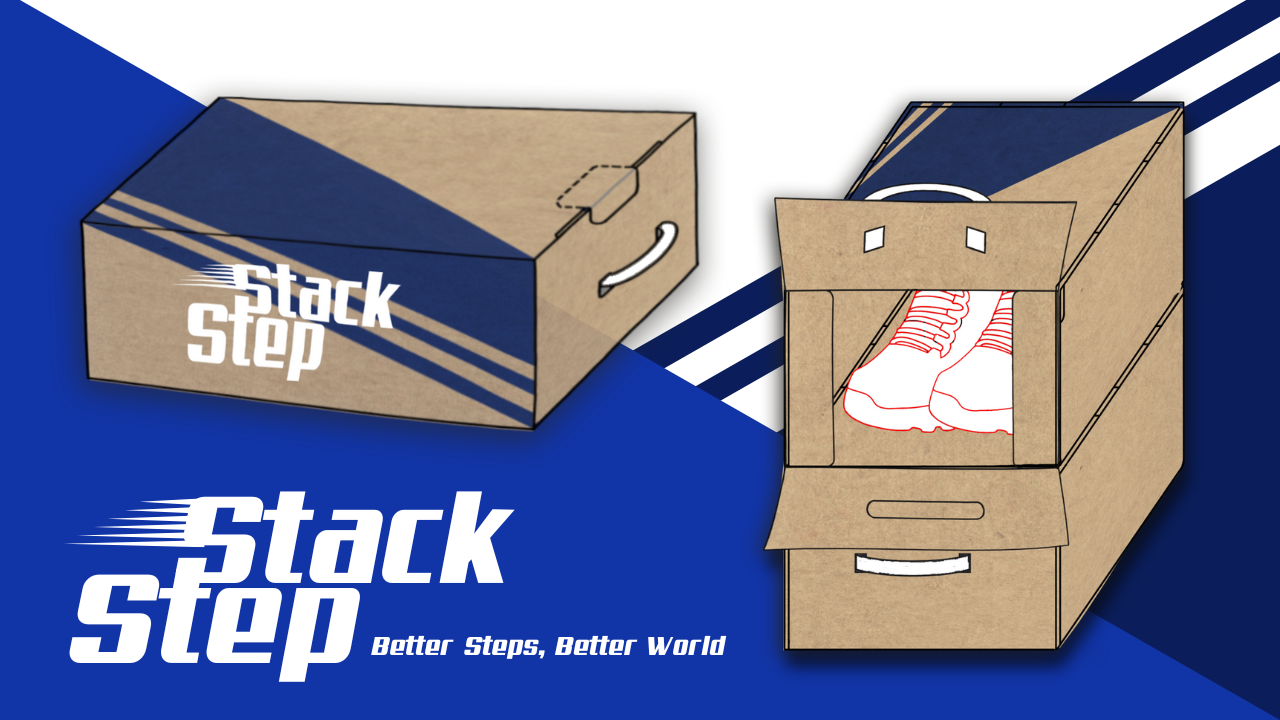
Our brand has designed a solution to these issues. Our shoe boxes are not only made from eco-friendly materials but are also designed to be stackable, saving space and providing easy access to shoes. This means consumers no longer need to worry about storage and can enjoy greater convenience. Additionally, our boxes feature handles, reducing the need for additional paper or plastic bags for carrying, thereby further reducing waste and aligning with the sustainable lifestyles of modern consumers.
SWOT Analysis
Strengths
- Use of Eco-Friendly Materials : Our brand stands out by using biodegradable or recyclable materials, which meets the needs of modern consumers who are environmentally conscious and seek eco-friendly products.
- Distinctive Shoe Box Design : Our shoe boxes are designed to convert into shoe racks, easily foldable and assemble without additional tools, while still being portable.
- Meeting Consumer Needs : We address the demands of consumers who care about the environment and desire aesthetically pleasing and practical products.
Weaknesses
- Insufficient Consumer Awareness of Reusability : Although our boxes are designed for reuse and easy storage, some consumer groups may not recognize their value and may discard the boxes after first use, undermining our intentions.
- Design May Not Cater to All Consumer Segments : While our boxes focus on convenience and storage, customers who prioritize fashion and luxury may find the design too simplistic and not aligned with their preferences.
Opportunities
- Growth of the Green Market : Modern consumers are increasingly valuing eco-friendly products.
- Expansion of the Shoe Market : The growth of the footwear industry presents opportunities for business expansion.
- Growth of E-Commerce : Selling through online platforms can help reach a larger consumer base.
Threats
- High Competition : The footwear industry is highly competitive in terms of price, quality, and innovation, necessitating brands to adapt quickly to market demands.
- Stricter Environmental Regulations : Future regulations and environmental policies may pressure footwear brands to reduce waste and manage resources more effectively.
Brand Development Goals
We believe that choosing eco-friendly packaging not only helps reduce environmental impact but also enhances consumers' lives by encouraging responsible environmental choices. Every step we take in designing our shoe boxes will create positive changes for both the planet and the society around us. Our vision is that every step taken with StackStep will lead to a positive and sustainable change—not just for you, but for the world.
Target Audience and Insights
Gen Z is a key demographic that places great importance on eco-friendliness and sustainability. Research shows that over 54% of Gen Z consumers are willing to pay 10% or more for products they perceive as environmentally friendly. This demonstrates the potential of this high-value consumer group to drive sales and support business growth. The products and services that appeal most to this group are those aligned with the 3R principles : 100% recyclable products, refillable options where customers bring their own packaging, and reusable packaging systems.
Moreover, Gen Z values aesthetics, and the products or brands that capture their interest must reflect thoughtful product design, consistent branding, and storytelling. They are drawn to brands with a clear narrative and prefer relatable stories from ordinary people over celebrity endorsements.
Packaging Design for Social and Environmental Impact
The concept behind our shoe box design is to transform it from a typical packaging into a stackable, reusable shoe storage solution. This not only reduces waste but also adds value to the product, providing more utility for consumers. Our design principles include
- Convenience and Space-Saving : The shoe box is designed for easy use and efficient storage. The front of the box features a handle, making it easy to open, close, and carry without the need for additional plastic or paper bags.
- Stackable Design : The base of the box features an extension that allows it to interlock with other boxes when stacked, creating a stable shoe rack. This promotes reuse and helps consumers organize their shoes efficiently, without the need to purchase additional racks.
Marketing Activities and Brand Development through Packaging
Activity 1: Brand Storytelling through Advertising
We will launch ads on platforms like YouTube, Facebook, Instagram, and TikTok to tell the story of StackStep as a brand that goes beyond just footwear, aiming to raise brand awareness. The advertisement will portray StackStep as a character that contributes to society and the environment through small but meaningful actions. The ad will follow a main character wearing StackStep shoes and carrying its shoe box, highlighting the brand’s role in supporting positive change. For example, helping an elderly person cross the street or assisting a child in retrieving a balloon, symbolizing that StackStep is not just a footwear brand but a driving force for positive, socially and environmentally responsible actions.
Activity 2: "StepForThePlanet" Campaign
We will run a campaign on TikTok and X, encouraging users to share pictures of how they use StackStep boxes as shoe racks at home, using hashtags like #StepForThePlanet and #StackStep. The users with the highest engagement will receive a discount on their next StackStep shoe purchase. Additionally, customers can bring old shoe boxes to recycle and receive a discount on new shoes from StackStep.
Measuring Marketing and Brand Performance
Activity 1 : Advertisement Metrics will focus on tracking view counts across platforms such as YouTube, Facebook, Instagram, and TikTok using their respective analytics tools (e.g., YouTube Analytics, Facebook Insights, Instagram Insights, TikTok Analytics). We will also monitor the click-through rate (CTR) to determine how many individuals clicked on the ad to visit the brand's website for more information, as well as the conversion rate to assess how many purchases were made following ad engagement.
Activity 2 : Hashtag Metrics will involve tracking the usage of hashtags like #StepForThePlanet and #StackStep in user posts through social media analytics tools such as Hootsuite, Sprout Social, or TweetDeck. We will measure total engagement, including likes, comments, and shares, on posts related to the campaign, and also track the conversion rate to see how many purchases were made as a result of the campaign, particularly those linked to the recycling initiative that offered discounts in exchange for old shoe boxes.
- แชร์:












 SCG PACKAGING PUBLIC COMPANY LIMITED